Support Networks Improving Service Access Through Verified Mobile Transfers
Olivia Hoffmann · Jul 30, 2026

Support Networks Improving Service Access Through Verified Mobile Transfers
Support networks now play a central role in mobile payment ecosystems where users complete verified transfers on handheld devices to reach multiple service categories, and these networks connect directly with transaction platforms to resolve issues in real time while maintaining compliance standards across regions.
Core Functions of Dedicated Assistance Channels
Assistance channels operate through integrated chat systems, voice support, and in-app messaging that link users with trained agents during verified transfer sequences, and data from transaction logs shows these channels reduce failed transfer rates by addressing verification mismatches before they escalate into full blocks.
Financial institutions in the United States coordinate with the Federal Deposit Insurance Corporation to standardize support protocols that cover everything from identity confirmation steps to transfer limit adjustments, while similar frameworks in the European Union rely on guidelines from the European Banking Authority to ensure cross-border consistency in how agents handle mobile verification queries.
Integration With Verified Transfer Processes
Verified transfers on handheld devices require multi-factor authentication that includes device fingerprinting, biometric checks, and one-time codes, and dedicated help channels intervene when any of these layers flag inconsistencies by guiding users through corrective actions without requiring them to restart the entire sequence.
Research from the Monetary Authority of Singapore indicates that platforms incorporating real-time agent support during transfer flows achieve higher completion rates compared to fully automated systems alone, since agents can reference account history and flag potential fraud patterns that algorithms might overlook in isolation.
Observers note that July 2026 saw several regional updates to mobile security standards that directly affected how support teams interact with transfer systems, particularly around encryption requirements for in-app communications.
Regional Developments and Data Trends
Canadian regulators through the Office of the Superintendent of Financial Institutions have published metrics showing increased adoption of dedicated support features in banking apps throughout 2026, and these features allow agents to view transfer details on their end while users remain on the handheld device, which shortens resolution times for common issues such as mismatched recipient details or temporary holds.
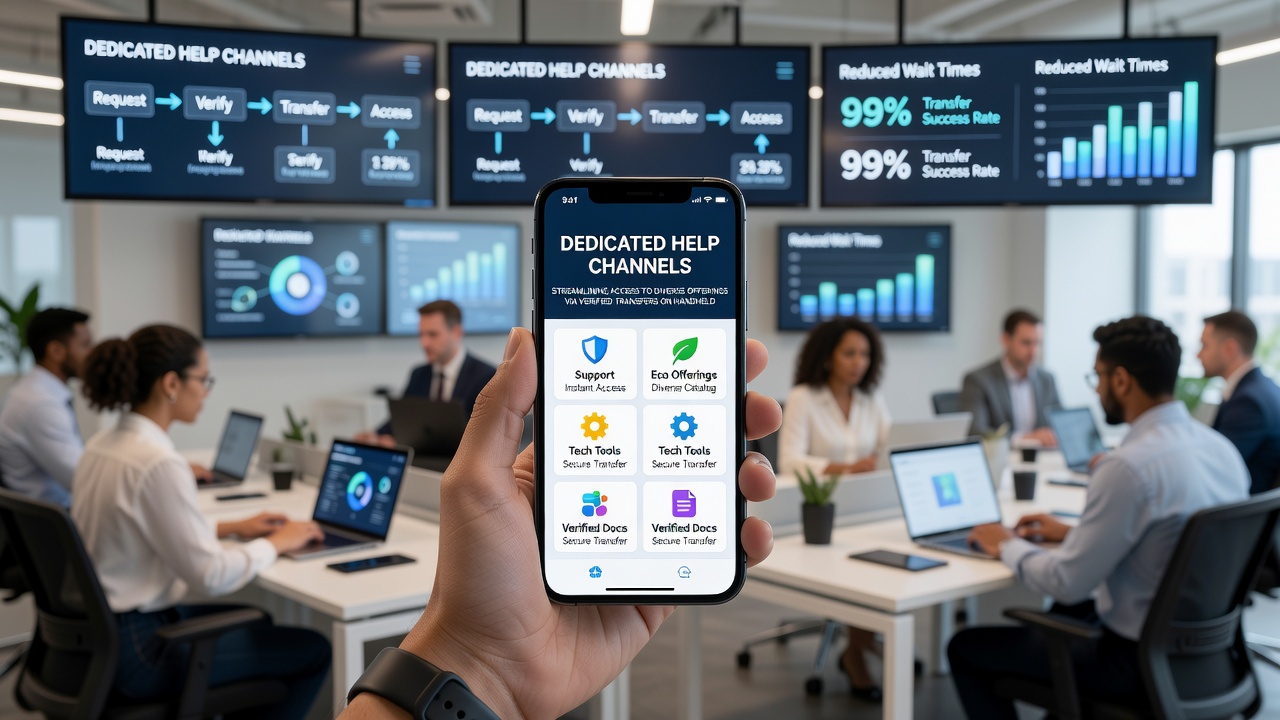
Australian financial authorities have tracked similar patterns, where support integration leads to measurable drops in abandoned transactions, and industry reports link this outcome to the availability of immediate guidance rather than users navigating help menus independently.
Technical Infrastructure Supporting These Channels
Backend systems connect support interfaces directly to transfer verification engines so agents receive contextual data the moment a session begins, and this setup relies on secure APIs that transmit only necessary details while preserving user privacy under applicable data protection rules.
Studies conducted by university research groups in the Nordic countries have examined how latency in these connections influences user satisfaction, and findings reveal that sub-second response times from agents correlate with higher trust levels in the overall mobile transfer process.
Future Outlook for Mobile Support Systems
Continued refinement of dedicated help channels focuses on predictive assistance that anticipates user needs based on transfer patterns, and organizations across multiple jurisdictions continue to test these capabilities under controlled regulatory sandboxes that prioritize security and accessibility.
Conclusion
Verified transfers on handheld devices gain reliability when paired with responsive support networks that address verification hurdles promptly, and ongoing collaboration between financial institutions, regulators, and technology providers sustains the infrastructure needed for these services to expand across diverse offerings while meeting compliance expectations in different regions.