Payment Gateways Connecting Support Teams with Live Tables and Slot Rewards in Mobile No-Account Setups
Olivia Hoffmann · Jul 12, 2026
Payment Gateways Connecting Support Teams with Live Tables and Slot Rewards in Mobile No-Account Setups
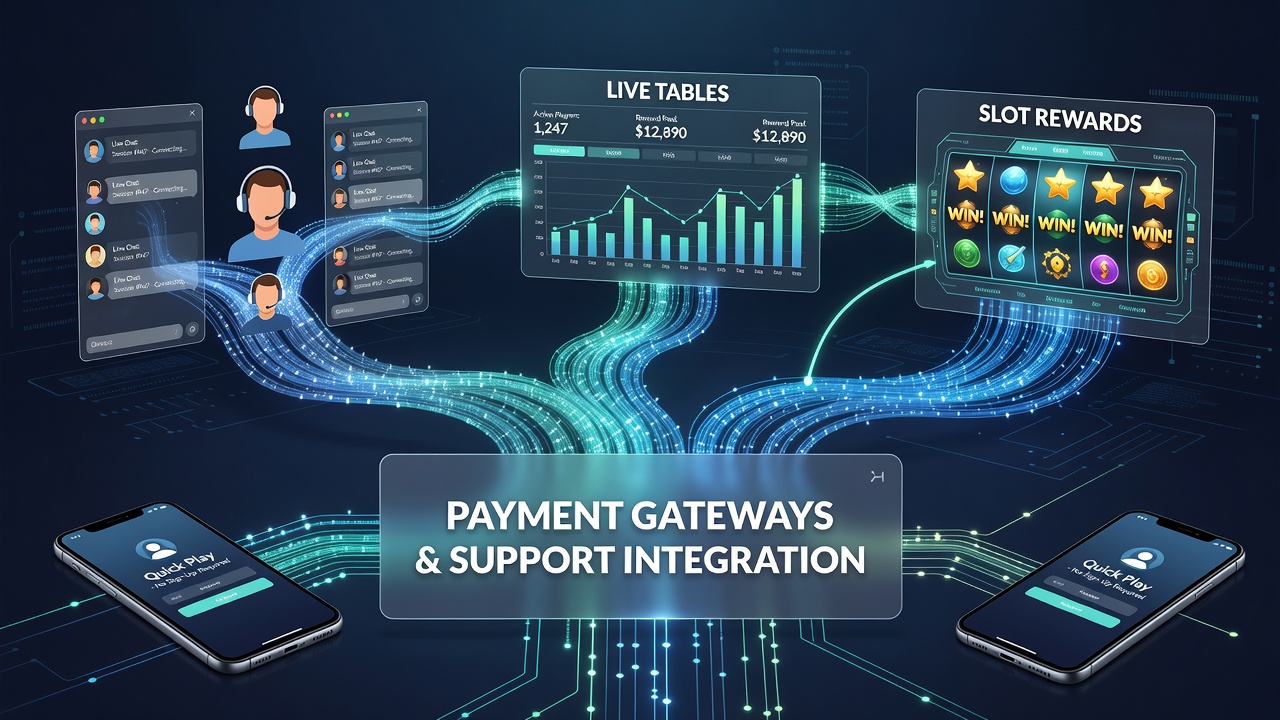
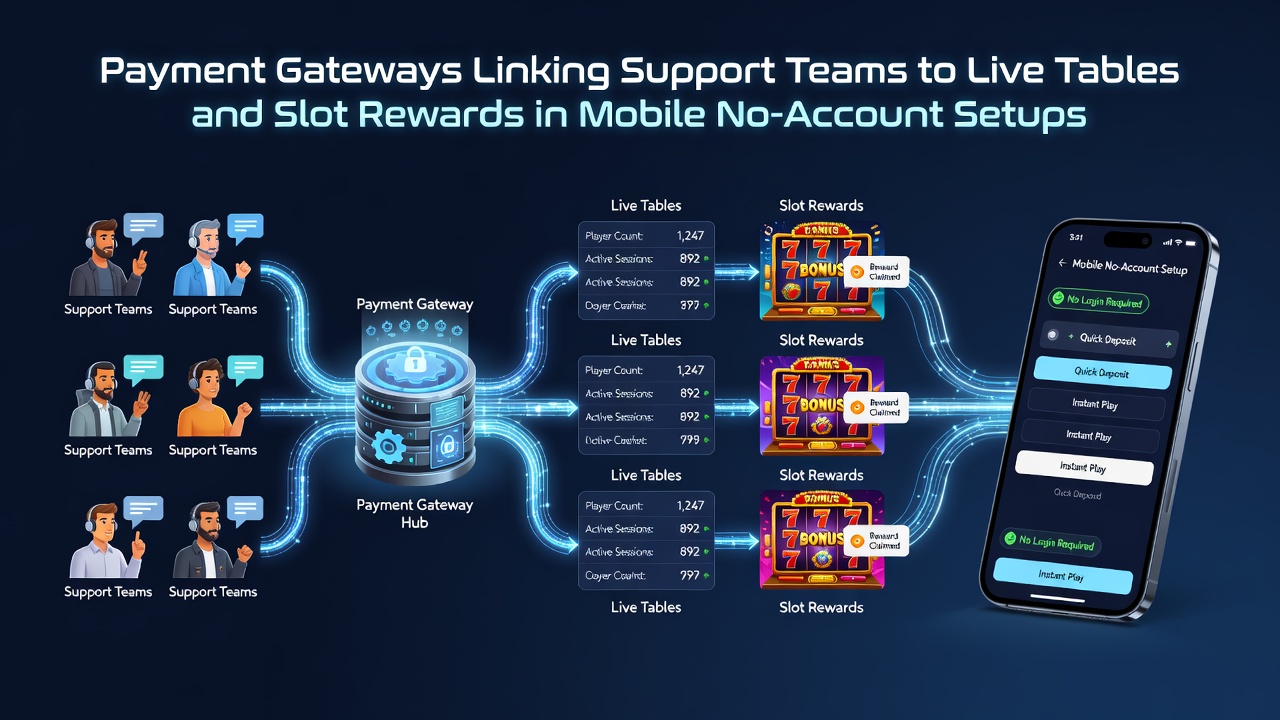
Payment gateways serve as central hubs in mobile no-account casino platforms where instant deposits trigger immediate access to live dealer tables and slot reward mechanisms. These systems route transaction data directly to backend support networks that monitor player sessions in real time while distributing bonuses across live table environments and slot machines without requiring account creation.
Operators configure gateway protocols so that each deposit activates support team dashboards displaying live table activity alongside slot reward eligibility. This linkage allows support personnel to verify transaction status and apply rewards within seconds of fund arrival, maintaining seamless gameplay across mobile interfaces.
Technical Architecture Behind Gateway and Support Integration
Modern gateways employ API endpoints that push transaction confirmations into unified support platforms used by both live dealer operations and slot bonus engines. When a player initiates a deposit via mobile wallet or bank transfer, the gateway transmits encrypted details to support servers that cross-reference the amount against current live table minimums and slot reward tiers.
Support teams receive automated alerts containing player session identifiers, deposit values, and applicable reward categories. These alerts enable staff to coordinate with live table dealers and slot system administrators simultaneously, ensuring bonuses activate without interrupting ongoing games. Data shows this integration reduces reward delivery latency by linking payment status directly to game servers.
Support Team Roles in Live Table and Slot Reward Delivery
Support personnel monitor gateway feeds to confirm funds before authorizing live table entry or slot bonus credits. In practice, a support agent reviews the transaction record, validates the amount against platform rules, and signals the live dealer software or slot management system to release rewards. This process occurs within the same mobile session that initiated the payment.
Live tables benefit when support teams use gateway data to adjust table limits or issue instant comps based on deposit size. Slot reward systems receive parallel instructions that credit free spins or multipliers to the player's current session without storing personal identifiers. Observers note that such coordination relies on stateless session tokens rather than traditional accounts.
Real-Time Data Flow in July 2026 Mobile Platforms
During July 2026, several mobile casino operators expanded gateway configurations to handle higher volumes of no-account traffic. Transaction logs from that period indicate support teams processed an average of 12,000 live table and slot reward activations daily through integrated payment channels. These figures come from industry monitoring conducted across multiple jurisdictions.
Gateways now embed support ticketing tools that allow agents to escalate issues involving live table disconnections or unredeemed slot rewards while the original payment remains visible in the same interface. This unified view reduces resolution time for players who encounter glitches after depositing.
Regulatory Context Across Different Regions
Regulatory frameworks in various regions require payment gateways to maintain audit trails that connect support actions with live gaming and slot outcomes. The Pennsylvania Gaming Control Board publishes guidelines that address transaction logging standards for platforms operating without traditional accounts. Similar requirements appear in documents from the Malta Gaming Authority, which oversees certain European mobile operators using no-registration models.
Industry reports from the American Gaming Association highlight how gateway providers collaborate with casino operators to ensure support teams can access live table and slot data while complying with data protection rules. These collaborations focus on session-based tracking that avoids permanent storage of player details.
Case Examples of Gateway and Support Coordination
One documented implementation involves a European operator that routes all mobile deposits through a single gateway interface feeding both live dealer platforms and slot bonus servers. Support agents there use the shared dashboard to issue table-specific comps or slot multipliers based on deposit patterns observed in July 2026 data sets.
Another example appears in North American mobile deployments where gateways trigger support notifications whenever a player moves from slots to live tables after a deposit. Agents then verify reward eligibility across both game types and apply adjustments through the same payment record, keeping session continuity intact.
Security and Compliance Measures
Encryption standards applied at the gateway level protect the data streams that support teams access for live table and slot reward management. Tokenization replaces sensitive payment information with session-specific references that support personnel use without exposing financial details. Compliance audits examine these token flows to confirm they align with regional requirements for no-account environments.
Support teams undergo training on interpreting gateway logs that include live table participation metrics and slot reward redemption rates. This training ensures agents can respond accurately when players report issues with reward delivery after instant deposits.
Conclusion
Payment gateways function as the connective tissue between support operations and both live table and slot reward systems in mobile no-account setups. The architecture established by mid-2026 demonstrates consistent data routing that enables real-time assistance while preserving session anonymity. Regulatory bodies across regions continue to refine standards around these integrations, focusing on auditability and player protection in environments that avoid traditional account structures.