Behind the Curtain: How Provider Alliances Streamline Bonus Triggers in Account-Free Mobile Live Play
Otto Schmidt · Jul 14, 2026
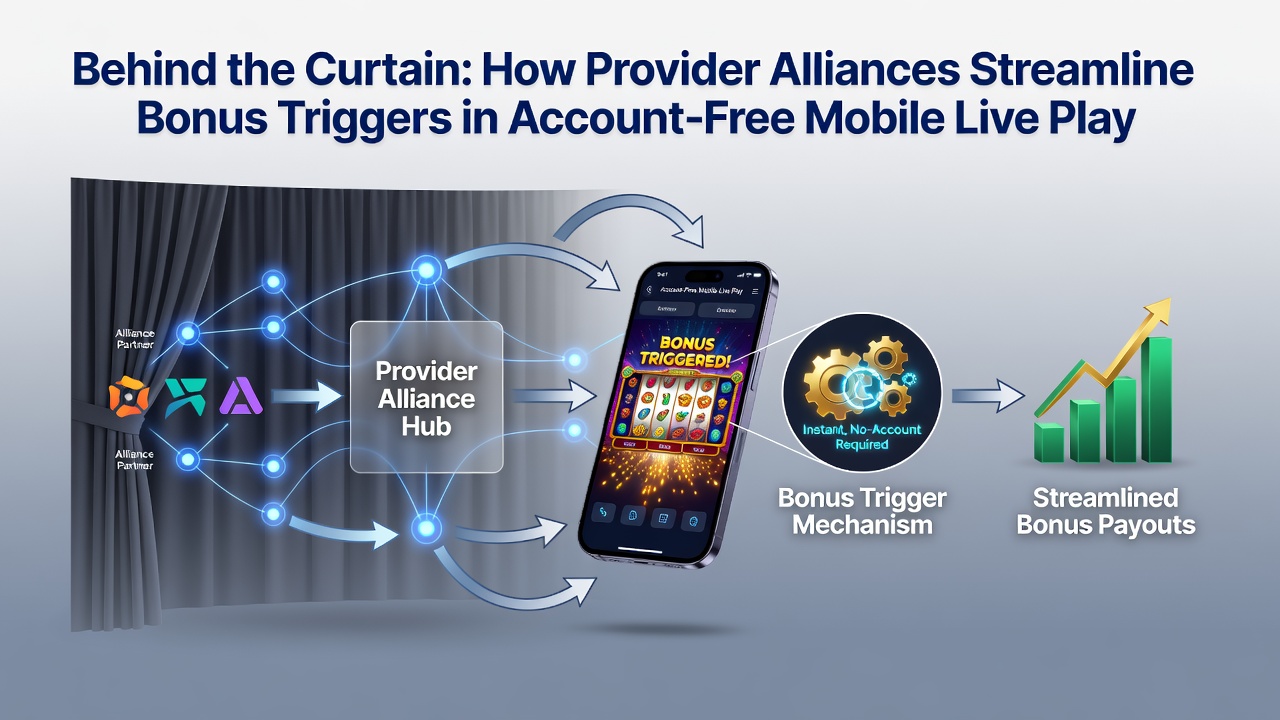
Behind the Curtain: How Provider Alliances Streamline Bonus Triggers in Account-Free Mobile Live Play
Account-free mobile live play continues to expand across multiple jurisdictions in 2026, and provider alliances now play a central role in managing bonus activation without requiring player registration. These partnerships connect game studios, payment processors, and platform operators through shared technical protocols that handle real-time data exchange. According to figures from the Nevada Gaming Control Board, live dealer sessions on mobile devices without accounts grew by 27 percent during the first half of the year, creating pressure on operators to deliver instant rewards while maintaining regulatory compliance.
Technical Foundations of Account-Free Systems
Account-free environments rely on temporary session tokens generated at the device level rather than permanent player profiles, which means bonus triggers must activate through encrypted API calls that verify eligibility in milliseconds. Alliances between providers allow these calls to route through centralized middleware layers that aggregate data from multiple live tables and slot engines simultaneously. Observers note that this structure reduces latency compared with earlier standalone systems, especially during peak evening hours when thousands of concurrent sessions occur.
One implementation involves a shared bonus ledger maintained across allied studios; each studio updates the ledger through standardized JSON payloads that record wager amounts, game outcomes, and time stamps. When a player meets predefined criteria, such as a minimum number of live dealer hands within a set window, the middleware issues a trigger that credits the bonus directly to the active session. This approach avoids the need for separate registration databases while still satisfying audit requirements from state regulators.
Coordination Mechanisms Among Game Providers
Alliances typically form around common technical standards that define how bonus parameters are exchanged and validated. Studios contribute distinct modules, for example one handles live roulette multipliers while another manages blackjack side-bet rewards, yet both feed into the same trigger engine. Data from the European Gaming and Betting Association shows that such modular alliances cut development cycles for new bonus features by roughly 35 percent in markets where registration-free play is permitted.
Security protocols within these partnerships incorporate multi-party encryption keys so that no single provider holds complete access to player session information. This distributed model supports compliance with data-protection rules in both North American and Asia-Pacific regions. Researchers tracking July 2026 deployments observed that alliances incorporating biometric session validation experienced fewer disputes over bonus eligibility than those relying solely on device fingerprinting.
Bonus Trigger Workflows in Live Environments
Live dealer tables present unique timing challenges because outcomes unfold in real time and players often switch between tables within a single session. Provider alliances address this by maintaining synchronized event streams that update bonus progress across all participating games. When a player completes a qualifying sequence, such as three consecutive wins on a partnered baccarat table, the trigger fires without interrupting the dealer interaction or requiring a page reload.
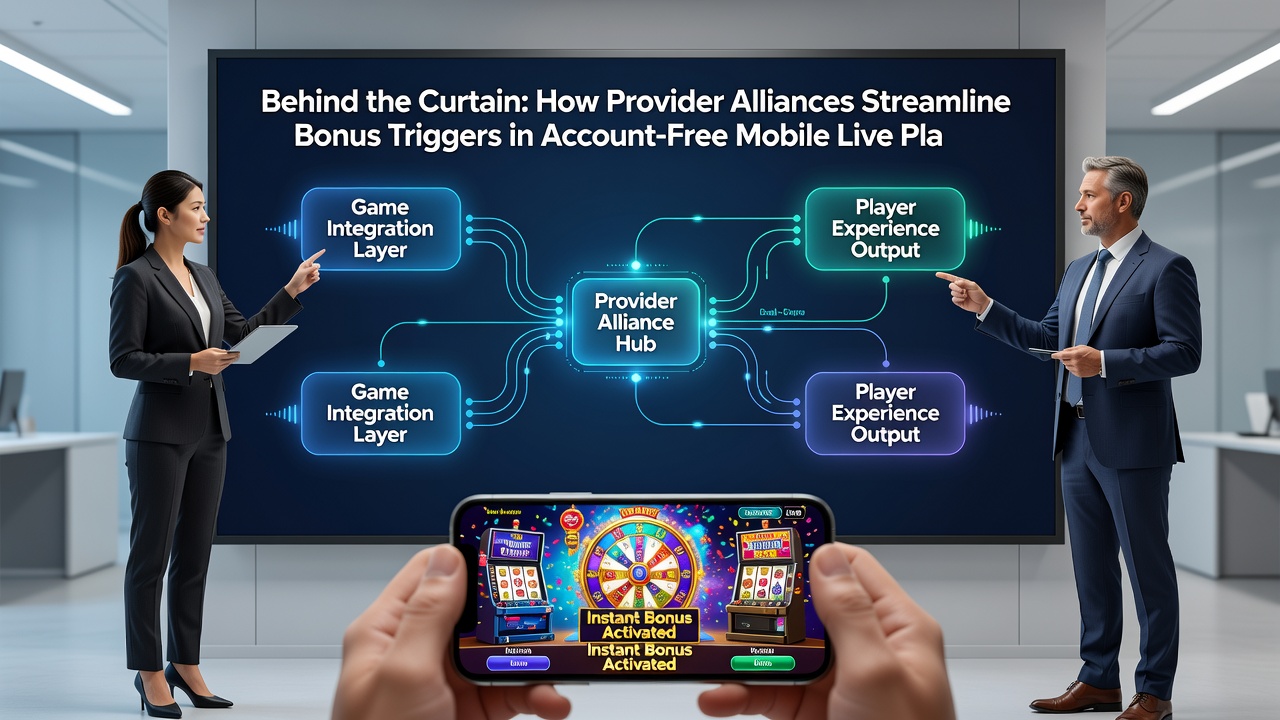
Case examples from operators in regulated Canadian provinces illustrate the pattern: allied studios share a common bonus rule set that automatically adjusts reward values based on aggregate session volume rather than individual game history. This aggregation occurs server-side through the alliance network, allowing the mobile interface to display updated bonus meters within two seconds of each qualifying action.
Regulatory and Operational Considerations
Regulators in multiple jurisdictions require clear audit trails for bonus awards even when no permanent accounts exist. Alliances therefore embed immutable logging mechanisms that record every trigger event with cryptographic timestamps. These logs can be queried by oversight bodies without exposing broader session data. Figures released by the Australian Communications and Media Authority indicate that operators using alliance-based logging passed compliance audits at higher rates during the second quarter of 2026 than those managing bonuses independently.
Operational teams within allied groups coordinate through joint dashboards that monitor trigger success rates across different mobile networks and device types. When anomalies appear, such as delayed activations on specific carrier networks, the alliance can reroute traffic through alternative endpoints without altering the player experience. This flexibility supports continuous live play sessions that span multiple hours and several game types.
Conclusion
Provider alliances have become integral to the operation of bonus systems in account-free mobile live play by establishing shared technical and security frameworks that support rapid, verifiable triggers. Data from regulatory agencies and industry associations shows measurable improvements in activation speed and audit readiness across participating markets. As mobile platforms continue to evolve through mid-2026, these collaborative structures remain central to maintaining both player engagement and regulatory alignment in environments that do not require traditional registration.